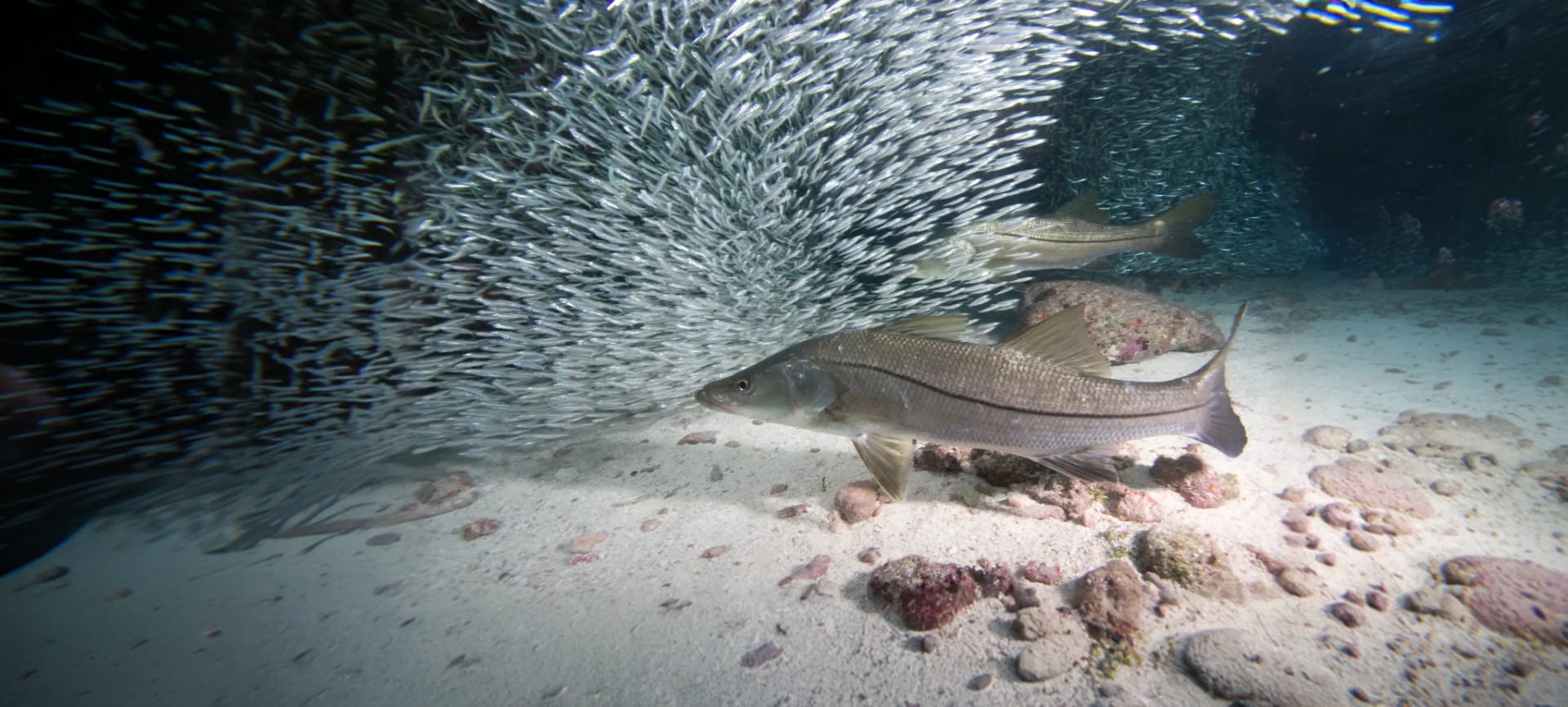

The Big Challenge: Disappearing Access
One of the biggest hurdles for land-based anglers in Florida today is shrinking access. With an exploding population and questionable ethics from some fishermen, many municipalities have tightened restrictions.
- Example: In Cape Coral, fishing from or under bridges is now outlawed.
- Impact: Prime ambush spots for snook and tarpon are off-limits, forcing anglers to adapt.
- Solutions: Many overcome this by hitting beaches, jetties, and even wade fishing flats during low tides.
Pressure and Timing
Although spots can be heavily pressured, knowing the right time to be there and the right bait is the key.
- Timing: Early mornings, late evenings, and tide changes are prime windows.
- Bait Selection: Match the hatch—use paddle tails, shrimp profiles, and jerkbaits that mimic local forage.
- Stealth: Approach quietly and make long casts to avoid spooking fish in clear water.
BUILT FOR FLORIDA’S PICKIEST PREDATOR
Why Land-Based Fishing Rocks
- Accessibility: No boat? No problem. Florida’s coastlines, canals, and spillways offer endless opportunities.
- Variety: Snook, redfish, tarpon, cobia, and trout are all within casting distance.
- Challenge: Limited mobility means you need strategy—perfect for anglers who love a good puzzle.

Best Land-Based Fishing Spots
- Bridges & Piers
- Why They Work: Structure attracts baitfish, which attracts predators.
- Pro Tip: Fish the shadow lines at night with paddle tails or shrimp profiles. (Check local regulations first—many areas now restrict bridge fishing).
- Seawalls
- Why They Work: Snook and tarpon cruise seawalls for ambush points.
- Pro Tip: Cast parallel to the wall and retrieve slowly—keep your lure in the strike zone.
- Spillways & Overflows
- Why They Work: Freshwater outflow creates current and concentrates bait.
- Pro Tip: Use jerkbaits or shrimp imitations during strong flow periods.
- Beaches & Jetties
- Why They Work: Open water access for snook, tarpon, pompano, and cobia.
- Pro Tip: Early mornings and evenings are prime—look for troughs and sandbars.
- Mangrove Shorelines
- Why They Work: Shade and cover make mangroves prime ambush territory.
- Pro Tip: Flip baits under overhanging limbs during high sun for snook and reds.
- Wade Fishing Flats
- Why They Work: Remote flats often hold unpressured fish like snook, reds, and trout.
- Pro Tip: In Charlotte Harbor, there are numerous spots you can hike into and wade fish. These areas require effort—usually a decent walk—but they’re worth it if you want to escape crowded seawalls and piers. Bring good footwear and pack light.
Target Species & Tactics

Snook
- Where: Seawalls, mangroves, piers, and spillways.
- Best Baits: Paddle tails (Shad Habits Jr), shrimp profiles (Shrimp Daddy), jerkbaits (Side Piece).
- Technique: Twitch-twitch-pause near structure; slow roll along seawalls.

Redfish
- Where: Potholes on flats during negative low tides, mangrove edges.
- Best Baits: Paddle tails and shrimp imitations.
- Technique: Lift-and-drop in potholes; flip under mangroves for shade-hugging reds.

Tarpon
- Where: Beaches, jetties, and deep channels near bridges.
- Best Baits: Larger paddle tails (Shad Habits XL) and jerkbaits.
- Technique: Long casts and steady retrieves; keep drag smooth for acrobatics.

Cobia
- Where: Jetties and nearshore beaches during migration.
- Best Baits: Big paddle tails or eel-style jerkbaits.
- Technique: Sight-cast when possible; slow roll near structure.

Sea Trout
- Where: Grass flats and sandy potholes near shorelines.
- Best Baits: Smaller paddle tails and shrimp profiles.
- Technique: Lift-and-drop or slow roll across potholes.
(Incidental catches like jack crevalle and black drum happen, but black drum typically require cut crab—not artificial baits.)
Gear Checklist
- Rod: 7’ medium-heavy or heavy spinning rod for the backbone you need around structure.
- Reel: 2500–5000 size with smooth drag for handling everything from snook and reds to big tarpon and cobia.
- Leader:
- Monofilament: 20–40 lb for abrasion resistance and shock absorption.
- Fluorocarbon: 20–40 lb for stealth and superior abrasion resistance in clear water.
- Pro Tip: Fluorocarbon is less visible underwater and sinks faster, making it ideal for pressured fish and clear conditions.
- Baits:

- Shrimp Daddy for finesse presentations.
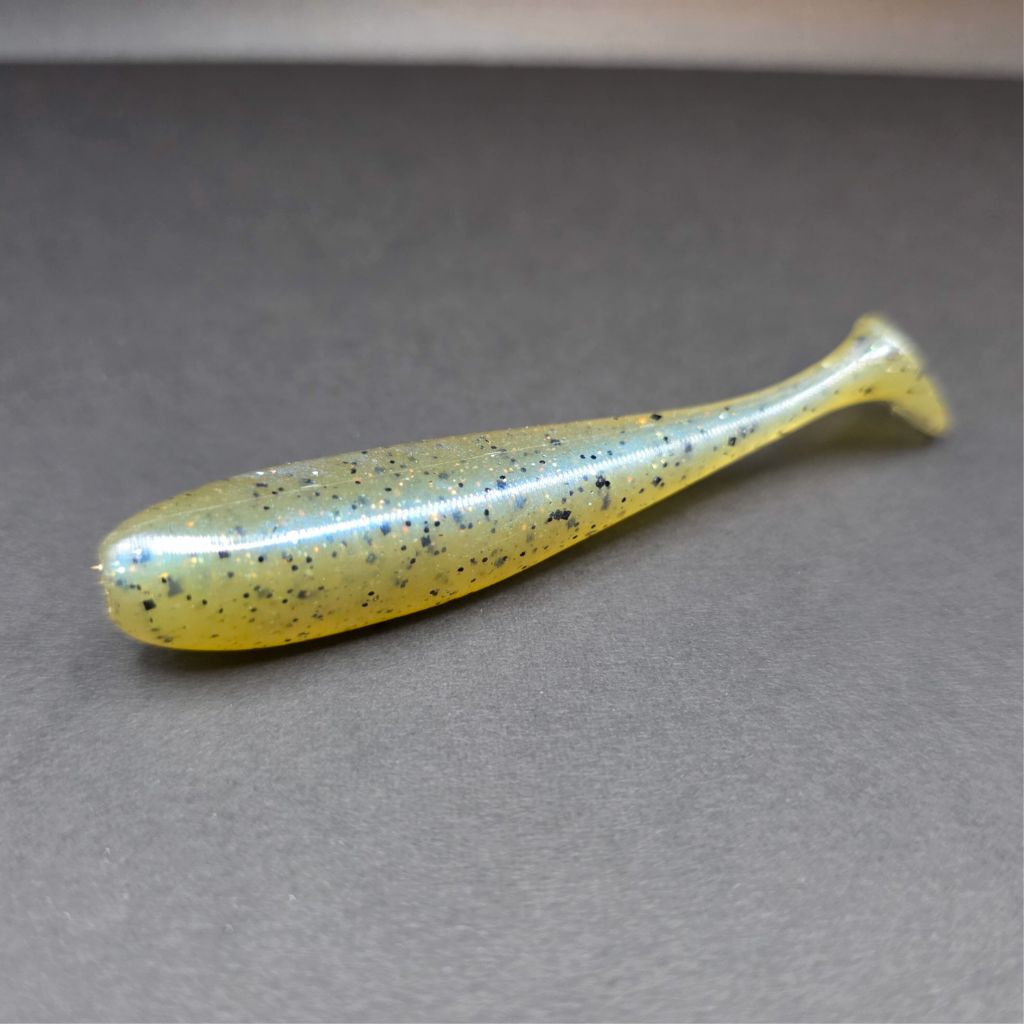
- Shad Habits Jr for covering water.

- Side Piece Jerkbait for aggressive strikes.

- Shad Habits XL for tarpon and cobia.
Techniques That Work
- Lift-and-Drop: Perfect for shrimp profiles near structure.
- Slow Roll: Ideal for paddle tails along seawalls and piers.
- Twitch-Twitch-Pause: Deadly for jerkbaits in current.
Seasonal Tips
Winter
- Fish negative low tides—reds and snook stack in potholes.
- Downsize your baits for lethargic fish.
Spring
- Snook and reds push into mangroves; trout fire up on flats.
- Tarpon start showing near beaches.
Summer
- Early mornings and evenings near beaches and jetties.
- Topwater action heats up—keep a plug handy.
Fall
- Cobia and tarpon migrate; snook feed aggressively before winter.
- Great time for big paddle tails and jerkbaits.
FAQ & Quick Checklist
Q: What’s the best bait for land-based snook?
A: Paddle tails like Shad Habits Jr or shrimp profiles like Shrimp Daddy.
Q: Do I need heavy gear for seawalls?
A: Yes—abrasion from concrete means 30 lb leader is smart.
Q: What size reel should I use for land-based fishing?
A: 2500–5000 size spinning reels are ideal for snook, reds, and tarpon.
Q: Can I catch tarpon from land?
A: Absolutely—beaches, jetties, and deep channels near bridges are prime spots.
Q: What’s the best time of day for land-based fishing?
A: Early mornings, late evenings, and tide changes are your best windows.
Q: Do artificial baits work for redfish and trout?
A: Yes—paddle tails and shrimp imitations are deadly on flats and potholes.
Q: How do I fish pressured spots effectively?
A: Stealth is key—approach quietly, make long casts, and use natural colors.
Q: What’s the best season for cobia from shore?
A: Fall and spring migrations near beaches and jetties are prime for cobia.
Q: Can I still fish bridges in Florida?
A: Check local regulations—many areas, like Cape Coral, have banned bridge fishing.
Q: What gear do I need for land-based tarpon?
A: Medium-heavy or heavy rod, 5000 reel, 30–40 lb leader, and big paddle tails or jerkbaits.
Checklist Before You Go:
✔ Rod & reel combo
✔ Leader material (mono or fluoro)
✔ Artificial baits (shrimp, paddle tails, jerkbaits)
✔ Polarized sunglasses
✔ Tackle bag with pliers and extra jigheads